
en
Livros
Leia em nossos aplicativos:
iOS
·Android
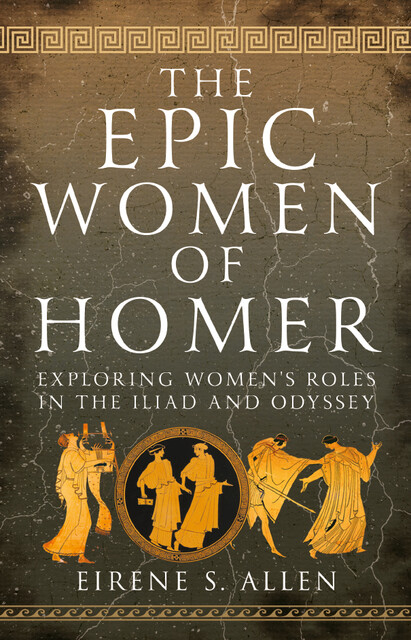
The Epic Women of Homer
- Sobre
- Citações2
- Leitores53
- Nas estantes
349 páginas impressas
- Publicação original
- 2025
- Ano da publicação
- 2025
- Editoras
- Pen and Sword, Pen and Sword History
Citações
- Jovana Spasićfez uma citaçãohá 7 meses
 The Homer I strove to share in these pages is a cultural consciousness that is reflecting on human experiences, both transcendent and acutely particular, and inviting its receivers to think with and through them. This Homer is meditating self-consciously on the systems that have been constructed to ascribe meaning to suffering and to promote social cohesion and connection, even knowing already that these systems will, at some point, inevitably fail. Seeing Homer as a communal consciousness in dialogue with itself, continuously shaped and reshaped over time, provides one possible explanation for why in Homer we can find anything, everything, of consequence in human experience. Extreme rage, enduring love, bitter resentment, gentle care, corrupt leadership, forgiveness of the unforgivable – all are woven into the epics so that even in their most alienating moments (and there are many such moments), these epics can still speak directly to us, whenever and wherever we are in time and space. To see and hear the multiplicity of voices – perhaps especially the women’s voices – and the dialogues among them, however, requires holding this duality: that however familiar Homer’s epics may feel, they are also distant. They belong to and exist in their own world, their own language, their own storytelling ecosystem. This ecosystem is a vast, elaborately constructed tapestry, each thread representing an individual life force woven into the cosmic whole.
 - riyafez uma citaçãohá 8 meses
 narratives are not stable things but always in motion, shaped by the teller of the moment and carried relentlessly forward in a steady beat


fb2epub
Arraste e solte seus arquivos
(não mais do que 5 por vez)